

On 29 July 2026, fans of Irish singer-songwriter Glen Hansard were faced with the shock of his sudden and unexpected passing. I didn’t have any personal connection to him or his music, but reading touching accounts of how much he and his creative work meant to people – from famous faces to the thousands of regular folk who attended his public wake – brought me back to 2016, when two of my longtime musical idols, David Bowie and Prince, died within a few months of each other.
At that time, I was a junior therapist at a practice in Dublin called Introspect Counselling. While there, I contributed a few posts to the website blog, one of which was called ‘Disenfranchised Grief & The Music Fan.’ In solidarity with Glen Hansard’s fans, and by way of marking the ten year anniversary of David and Prince’s departures, I’ve decided to dig it out of the archives and give it a re-release here.
I hope the grief being experienced by those who loved Glen and his music know just how valid it is. ❤️
Disenfranchised Grief & The Music Fan (July 2016)
Loss is a universal hurt that we all experience during their lives, yet society often tries to prescribe whose loss is more worthy of grieving; whose pain is more ‘valid;’ who has the right to sympathy and who should simply carry on as normal. People experience grief in countless different ways, for countless different reasons, and for countless different things, but in many cases the griever can feel misunderstood in their sadness, especially when the loss is not recognised as significant by society. As an answer, the concept of disenfranchised grief seeks to give voice to those who feel disempowered in their mourning.
To disenfranchise is to deprive someone of their rights, hence ‘disenfranchised grief’ can be defined as ‘the grief experienced by those who incur a loss that is not, or cannot be, openly acknowledged, publicly mourned or socially supported’ (Doka, 1999, p. 37). The term was first coined in 1989 by Dr. Kenneth Doka, and it has since become widely acknowledged in the counselling world. At its core is a questioning of society’s use of ‘grieving rules’ that attempt to define who should be allowed to grieve, under what circumstances, for what duration, and so on (Doka, 1999). Crucially, the grieving does not necessarily have to be in relation to a physical death – more intangible losses are given equal credence (Harju, 2014). Just a few examples of situations in which a person’s sense of loss may be tip-toed around or not properly acknowledged include miscarriages, the death of a pet, watching a loved one succumb to a transformative illness such as Alzheimer’s, and the end of a clandestine relationship such as an extra-marital affair or closeted gay union (Doka, 1999; Harju, 2014). To this list, I would like to add the grief of the music fan upon the death of an idol.

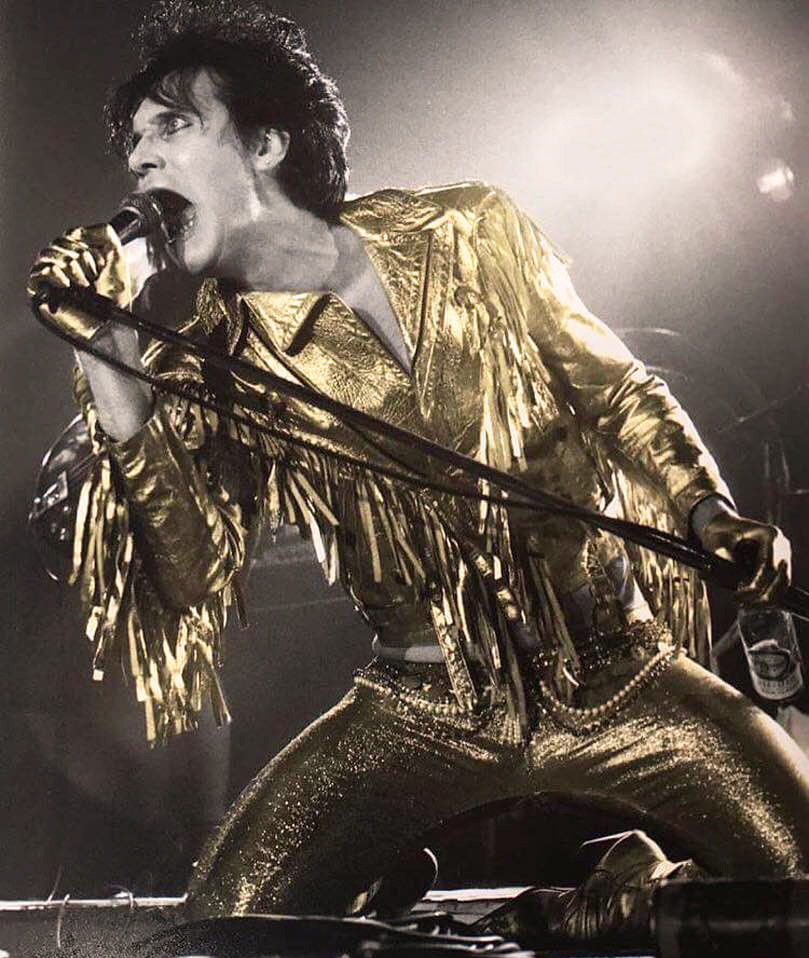
2016 has so far seen an unusually high number of high-profile celebrity deaths, two of which had a particular resonance for me – firstly, David Bowie (January 10), and then Prince (April 21). As I mentioned in a previous blog post about Björk, music is a very important part of my life, and I would liken many a song or album to a dear friend, not just something to have on in the background while making dinner. Myself and others frequently refer to our musical heroes on a first name basis, as if we know them intimately, but the fact remains that no matter how many albums we collect, interviews we read or concerts we attend, we don’t actually know them. And yet they permeate our lives and have touched something in us on such a deep level that it feels like we do, with the power of the music and words, as well as what the artist represents to the listener, compensating for the lack of direct contact. I have had relationships with David Bowie and Prince, through their music, for about 15 years – years filled with personal joys and struggles that they have helped soundtrack and document in my mind. Discovering these two sexuality renegades at a time when I was unsure of what kind of man I was or wanted to be proved an invaluable stepping stone towards authenticity – they started off as musicians, transformed into role models and finally became like old friends. They were unwitting but unwavering champions of my cause, providing solace, empathy and support, as well as lots of fun on the way. And though the world as a whole reacted with shock to their deaths, the loss will undoubtedly have been experienced more deeply by those of us who felt that special connection to them. It is at this point that disenfranchised grief comes into play.
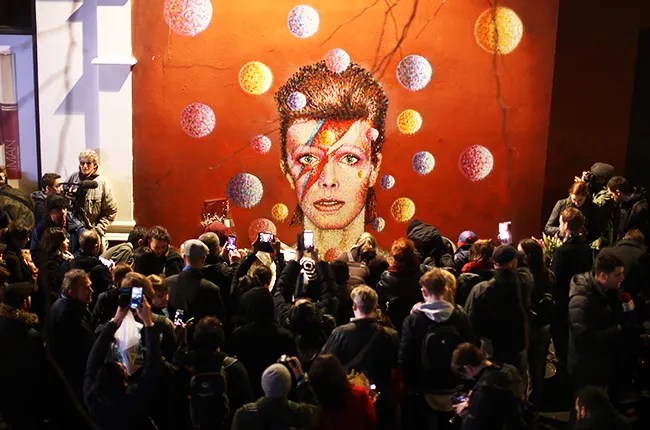
The ‘grieving rules’ of society as outlined by Doka are not readily embracing of non-traditional losses, so I would say it’s unlikely that an employer, for example, would accept the mourning of a rock star as a valid reason for time off or for being distracted at work. As such, I would be quite certain that the true extent of the loss for many Bowie and Prince fans was suppressed at the time – given the physically distant relationship to the object of mourning, many fans assume that others will view them as silly for experiencing an ‘abnormal’ emotional response (Harju, 2014). They may therefore put a cap on their feelings, or if they do show their true state, they may feel alone/misunderstood in their grief. A Prince fan called Susana (Lopes-Snarey, 2016) describes this very well: ‘I have honestly struggled with overwhelming grief since his passing, and I know there are a few people who have looked at me thinking, “Oh my God… she’s lost it, she is really completely bonkers”. But I don’t care, that’s their issue, not mine. He is like family to me.’
Similarly, for many disenfranchised grievers there is no opportunity to engage in a ritual which may validate the loss and help towards healing (Doka, 1999). For a music-related example, consider the lyrics to Björk’s song ‘Family,’ written in the wake of her marital breakdown – ‘Is there a place where I can pay respects for the death of my family? / Where do I go to make an offering?’ Many Bowie and Prince fans in big cities across the world had the opportunity to attend tribute events like street parties in the aftermath of their deaths, but many more did not. Such events provide a sense of communal mourning akin to a wake or funeral, and provide the griever with legitimacy for their sense of loss. Many of those unable to physically participate will have found solace in online fan communities that also give the griever a platform to share their loss with others who will empathise with and support them (Harju, 2014).
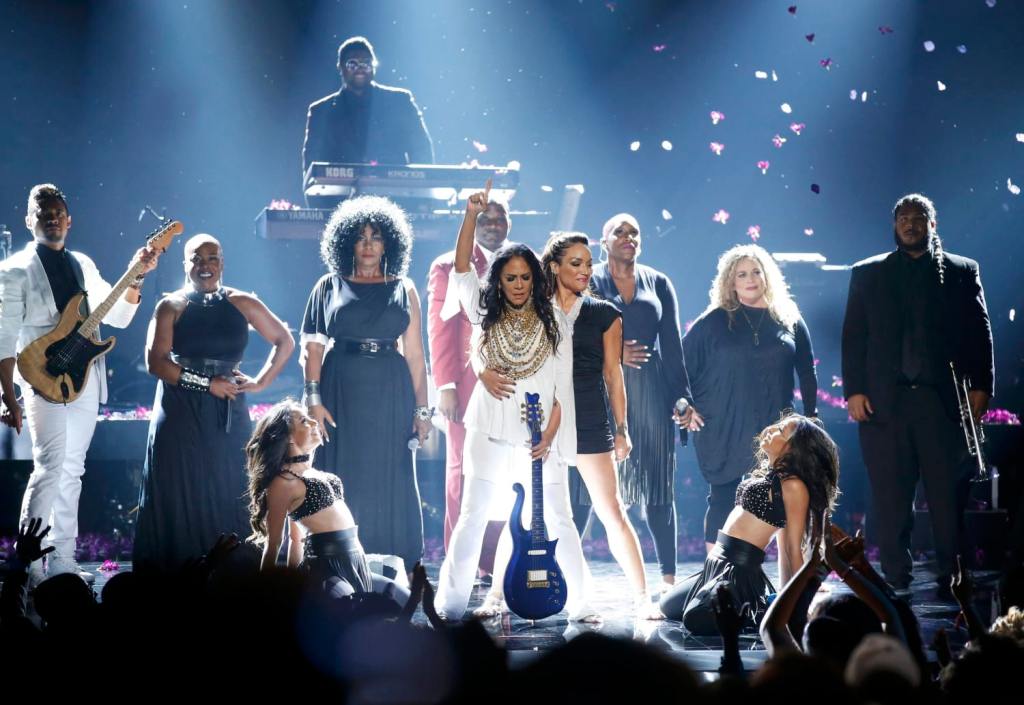
For me, there was something particularly powerful about watching the BET (Black Entertainment Television) Awards last month, where the majority of live performances were Prince tributes by soul and RnB royalty such as Stevie Wonder, Erykah Badu and Sheila E. The latter’s epic closing performance seemed to have the entire audience on their feet in a joyous commune of celebration and mourning, and I’m sure there were plenty of quiet tears (yes, me included!) shed at the culmination, with the triumphant lifting of one of the man’s signature guitars into the air in reverence. The thunderous applause that followed spoke volumes. Bowie fans, meanwhile, may also have found comfort in knowing that thousands of others would simultaneously be listening to his final album, ‘Blackstar,’ after his passing –released just two days before his death, I imagine it as a worldwide listening party/mourning ritual hybrid, and a fitting farewell to a career spanning six decades. It has been suggested that Bowie orchestrated the whole thing, turning his death, as so much of his life, into a kind of art, and if this was the case, then it truly shows his deep affection for his fans and in a way pre-empted the disenfranchised grief many would experience in his passing. Prince, too, was also personally aware of the effect an idol’s death can have on the fan, and his words below (cited in Lopes-Snarey, 2016) seem the most appropriate to finish this post with. He is basically saying, ‘I get it – I get why you’re so upset’ – and that’s often all the disenfranchised griever needs to start the healing.
‘For people who don’t understand why others mourn the death of artists, you need to understand that these people have been a shoulder to cry on. Our rock.
They’ve been family, friends, leaders, teachers and role models.
Many have taught us what we need to know and what to do when times get rough.
They’ve helped us to move on.
They’ve pushed us out of bed.
They’ve helped us to live when nobody else had the time to.
Artists have inspired us in endless ways and have been with us through stages in our lives.
We’ve made memories with them.
So when they die, a part of us dies.’

References:
Doka, K.J. (1999). Disenfranchised grief. Bereavement Care 18(3).
Harju, A. (2014). Socially shared mourning: Construction and consumption of collective memory. New Review of Hypermedia and Multimedia 21(1-2).
Lopes-Snarey, S. (2016). Prince: 1958-2016. http://www.susanalopessnarey.com/prince-1958-2016/